

Hey there! As a supplier of accelerometers, I often get asked about the scale factor of an accelerometer. So, I thought I'd take a few minutes to break it down for you.
First off, let's talk about what an accelerometer is. In simple terms, an accelerometer is a device that measures acceleration. Acceleration is the rate of change of velocity, and it can be caused by a variety of things, like gravity, movement, or vibration. Accelerometers are used in a ton of different applications, from smartphones and wearables to cars and airplanes.
Now, the scale factor of an accelerometer is a pretty important concept. It's basically the relationship between the output signal of the accelerometer and the actual acceleration it's measuring. In other words, it tells you how much the output of the accelerometer changes for a given change in acceleration.
Let's say you have an accelerometer with a scale factor of 10 mV/g. That means for every 1 g (which is the acceleration due to gravity on Earth, approximately 9.8 m/s²) of acceleration, the accelerometer will output a voltage of 10 millivolts. If the acceleration increases to 2 g, the output voltage will increase to 20 millivolts, and so on.
The scale factor is usually specified by the manufacturer, and it can vary depending on the type of accelerometer. There are different types of accelerometers out there, and each has its own characteristics and scale factors.
One type is the High - Temperature Accelerometer Sensor. These are designed to work in high - temperature environments, like in industrial furnaces or aerospace applications where temperatures can get really high. The scale factor of a high - temperature accelerometer is carefully calibrated to ensure accurate measurements even in those extreme conditions.
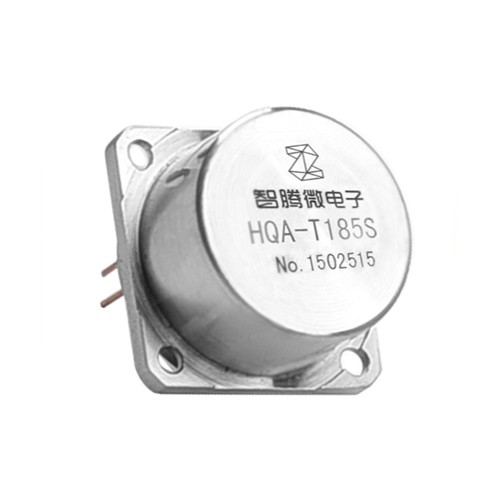
Another type is the Digital Output Quartz Flexure Accelerometer. These accelerometers use quartz flexure technology to measure acceleration. They are known for their high precision and stability. The scale factor of a digital output quartz flexure accelerometer is often very accurate, which makes them ideal for applications where precise acceleration measurements are crucial, such as in navigation systems.
Then there's the MEMS Accelerometer. MEMS stands for Micro - Electro - Mechanical Systems. These accelerometers are small, low - cost, and widely used in consumer electronics like smartphones and tablets. They have a relatively lower scale factor compared to some of the other types, but they are still accurate enough for most consumer applications.
So, why is the scale factor important? Well, it's all about getting accurate measurements. If you know the scale factor of an accelerometer, you can convert the output signal of the accelerometer into an actual acceleration value. This is crucial for applications where you need to know the exact acceleration, like in automotive safety systems or flight control systems.
Let's take a look at an example. Suppose you're developing a fitness tracker that uses an accelerometer to measure the user's movement. You need to know the scale factor of the accelerometer so that you can accurately calculate the user's acceleration and, from that, estimate things like the distance traveled or the number of steps taken. If the scale factor is incorrect, your fitness tracker will give inaccurate readings, and that's not good for the user.
However, there are some factors that can affect the scale factor of an accelerometer. Temperature is one of the biggest factors. As the temperature changes, the physical properties of the accelerometer can change, which can cause the scale factor to drift. That's why high - temperature accelerometers are so important in applications where temperature variations are significant.
Another factor is the age and wear of the accelerometer. Over time, the components of the accelerometer can degrade, which can also affect the scale factor. That's why regular calibration is important to ensure that the accelerometer is still providing accurate measurements.
When choosing an accelerometer, it's important to consider the scale factor along with other specifications like sensitivity, bandwidth, and accuracy. You need to make sure that the accelerometer you choose has a scale factor that is suitable for your application.
If you're in the market for an accelerometer, we've got a wide range of options available. Whether you need a high - temperature accelerometer for an industrial application, a digital output quartz flexure accelerometer for a precision measurement task, or a MEMS accelerometer for a consumer product, we can help you find the right one.
Our team of experts can assist you in understanding the scale factor and other specifications of our accelerometers. We can also provide guidance on calibration and maintenance to ensure that your accelerometer continues to perform accurately over time.
If you're interested in learning more or discussing your specific requirements, don't hesitate to reach out. We're here to help you make the best choice for your project. Whether you're a small startup working on a new consumer device or a large corporation in need of high - performance accelerometers for your industrial equipment, we've got the solutions you need.
In conclusion, the scale factor of an accelerometer is a key parameter that determines how accurately the accelerometer can measure acceleration. Understanding the scale factor and how it can be affected by various factors is crucial for getting reliable and accurate measurements in any application. So, if you have any questions or need further information, just let us know.

References:
- General knowledge of accelerometer technology from industry experience.
- Manufacturer specifications of various accelerometer types.