

As a provider of Inertial Measurement Units (IMUs), I often get asked about what exactly an IMU outputs. In this blog post, I'll delve into the details of an IMU's output, its significance, and how it is used across various industries.
Understanding the Basics of an IMU
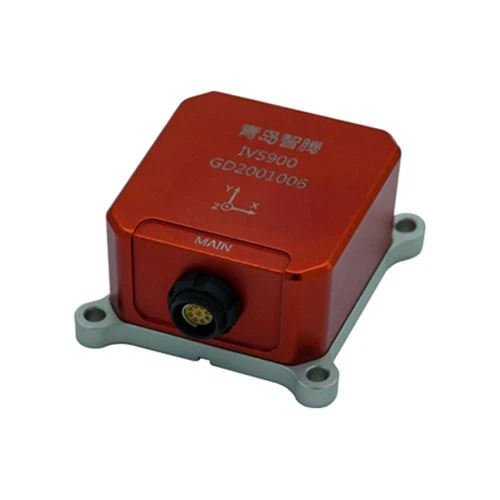
Before we discuss the output, let's briefly understand what an IMU is. An Inertial Measurement Unit IMU is a device that measures and reports a body's specific force, angular rate, and sometimes the orientation of the body, using a combination of accelerometers, gyroscopes, and sometimes magnetometers.
Output Components of an IMU
Accelerometer Output
The accelerometer in an IMU measures proper acceleration, which is the acceleration it experiences relative to free fall. In other words, it measures the acceleration forces acting on the device, including the force of gravity. The output is typically given in units of g (where 1 g is approximately 9.81 m/s²).
For example, when an IMU is at rest on a flat surface, the accelerometer will measure an acceleration of approximately 1 g in the direction opposite to the gravitational force. If the IMU is in motion, the accelerometer will measure the sum of the gravitational acceleration and the acceleration due to the motion of the device.
The accelerometer output is crucial for applications such as motion detection, vibration analysis, and determining the tilt or inclination of an object. In robotics, for instance, accelerometer data can be used to detect sudden movements or changes in the robot's position, which can help in preventing falls or collisions.
Gyroscope Output
The gyroscope in an IMU measures the angular rate or the rate of rotation of the device around its three axes (usually labeled as x, y, and z). The output is typically given in units of degrees per second (°/s) or radians per second (rad/s).
Unlike the accelerometer, which measures linear acceleration, the gyroscope focuses on rotational motion. It provides information about how fast the device is rotating in each direction. This data is essential for applications that require precise orientation control, such as drones, virtual reality headsets, and navigation systems.
For example, in a drone, the gyroscope output is used to maintain the drone's stability and control its orientation during flight. By continuously measuring the angular rate, the drone's flight controller can adjust the speed of the motors to counteract any unwanted rotation and keep the drone level and on course.
Magnetometer Output (Optional)
Some IMUs also include a magnetometer, which measures the strength and direction of the magnetic field around the device. The output is typically given in units of gauss (G) or tesla (T).
The magnetometer can be used to determine the device's orientation relative to the Earth's magnetic field, which is useful for applications such as compass navigation. By combining the magnetometer data with the accelerometer and gyroscope data, an IMU can provide a more accurate and comprehensive picture of the device's orientation in three-dimensional space.
However, it's important to note that the magnetometer output can be affected by external magnetic fields, such as those generated by nearby electronic devices or metal objects. Therefore, additional calibration and filtering techniques are often required to ensure the accuracy of the magnetometer data.
Combining the Outputs for Orientation Estimation
While the accelerometer, gyroscope, and magnetometer each provide valuable information on their own, the real power of an IMU lies in its ability to combine these outputs to estimate the device's orientation in three-dimensional space.
One common method for orientation estimation is the use of sensor fusion algorithms, such as the Kalman filter or the complementary filter. These algorithms take into account the strengths and weaknesses of each sensor and combine their outputs to produce a more accurate and stable estimate of the device's orientation.
For example, the accelerometer is good at measuring the static orientation of an object (e.g., its tilt or inclination), but it can be affected by vibrations and sudden movements. The gyroscope, on the other hand, is very accurate at measuring short-term changes in orientation, but it can drift over time due to integration errors. By combining the data from both sensors using a sensor fusion algorithm, we can get a more accurate and reliable estimate of the device's orientation.
Applications of IMU Output
The output of an IMU has a wide range of applications across various industries, including:
Aerospace and Defense
In the aerospace and defense industry, IMUs are used for navigation, guidance, and control of aircraft, missiles, and unmanned aerial vehicles (UAVs). The IMU output provides critical information about the vehicle's position, orientation, and motion, which is essential for maintaining stability, achieving accurate navigation, and performing complex maneuvers.
Automotive
In the automotive industry, IMUs are used for a variety of applications, including electronic stability control (ESC), rollover detection, and advanced driver assistance systems (ADAS). The IMU output helps in detecting sudden changes in the vehicle's motion, such as skidding or rolling, and can trigger safety features to prevent accidents.
Consumer Electronics
In consumer electronics, IMUs are found in smartphones, tablets, smartwatches, and virtual reality headsets. The accelerometer and gyroscope data are used for features such as screen rotation, gesture recognition, and augmented reality applications. For example, in a smartphone, the accelerometer can detect when the phone is tilted or shaken, which can be used to trigger certain actions or games.
Robotics
In robotics, IMUs are used for motion control, balance, and navigation. The IMU output provides information about the robot's position, orientation, and movement, which can be used to control the robot's joints and motors and navigate through its environment. For example, in a humanoid robot, the IMU can help the robot maintain its balance while walking or performing other tasks.
Conclusion
In conclusion, the output of an IMU consists of data from the accelerometer, gyroscope, and sometimes the magnetometer, which provide information about the device's linear acceleration, angular rate, and magnetic field. By combining these outputs using sensor fusion algorithms, an IMU can estimate the device's orientation in three-dimensional space, which has a wide range of applications across various industries.
If you're interested in learning more about our IMUs or have any questions about their output or applications, please don't hesitate to contact us. We'd be happy to discuss your specific needs and help you find the right solution for your project.
References
- "Inertial Navigation Systems with Geodetic Applications" by Gérard Lachapelle and Michael E. Cannon
- "Sensor Fusion for Android Developers" by Tero Karvinen
- "Introduction to Inertial Navigation" by Paul D. Groves