

Sensor
Your Leading Sensor Supplier
Qingdao ZITN Technology is a premier manufacturer of high-end sensors, hybrid integrated circuits(HIC), HTHP MWD/LWD solution,DTS/DAS solutions. We ZITN Technology are recognized as a national-level specialized, sophisticated, and distinctive company, and a Shandong Provincial Manufacturing Champion, underscoring our leadership and innovation in the field.
Over 23 years of dedicated innovation, we have developed two flagship product series known for "High-Precision & High-Reliability" and "High-Temperature & High-Reliability," serving extreme environments in aerospace, and deep-earth/sea exploration. Ousolutions are trusted by over 800 clients across more than 30 countries worldwide.
-
![High-Temperature Directional Sensor]() High-Temperature Directional Sensor±0.1° Inclination Accuracy All-in-One Sensor Withstands 175°C for Stable Performanceread more
High-Temperature Directional Sensor±0.1° Inclination Accuracy All-in-One Sensor Withstands 175°C for Stable Performanceread more -
![Quartz Flexure Accelerometer]()
-
![Miniature Directional Sensor]()
-
![High Temperature Fluxgate Sensor]() High Temperature Fluxgate SensorBuilt for High-Temperature Environmentsread more
High Temperature Fluxgate SensorBuilt for High-Temperature Environmentsread more
Flexible & Easy to Install
High Precision & Stability -
![Miniature Vibration-Resistant Directional Sensor]() Miniature Vibration-Resistant Directional SensorIntegrates 9-parameter measurement in compact spaceread more
Miniature Vibration-Resistant Directional SensorIntegrates 9-parameter measurement in compact spaceread more
2000g Shock resistance
20grms Vibration resistance -
![MEMS Accelerometer]() MEMS Accelerometer3.6 mg Excellent Long-Term Bias Repeatabilityread more
MEMS Accelerometer3.6 mg Excellent Long-Term Bias Repeatabilityread more
High Reliability in Harsh Environments -
![Logging Micro Directional Sensor]() Logging Micro Directional Sensor3-axis accelerometer, 3-axis fluxgateread more
Logging Micro Directional Sensor3-axis accelerometer, 3-axis fluxgateread more
Low power consumption
Compact structure, small size -
![Digital Output Quartz Flexure Accelerometer]() Digital Output Quartz Flexure AccelerometerDigital Outputread more
Digital Output Quartz Flexure AccelerometerDigital Outputread more
High Precision & High Stability -
![Dynamic Rotary Directional Sensor]() Dynamic Rotary Directional SensorDesign for Demanding MWD environment.read more
Dynamic Rotary Directional SensorDesign for Demanding MWD environment.read more
High accuracy in 0-175℃ full temp. Range
Reliably operates while rotating (150 rpm) and under severe vibration (6g) -
![High-Temperature Sector Directional Sensor]() High-Temperature Sector Directional SensorStable performance at 175°Cread more
High-Temperature Sector Directional SensorStable performance at 175°Cread more
Unique Dual Static and Dynamic Measurement Capability
4 to 250 Sector Configurations -
![Inertial Measurement Unit IMU]() Inertial Measurement Unit IMUDelivering real-time, accurate dataread more
Inertial Measurement Unit IMUDelivering real-time, accurate dataread more
Precisely calibrated gyroscope and accelerometer
High-performance satellite navigation module -
![Gyroscopic Directional Sensor]() Gyroscopic Directional SensorGyro North-Seeking,operates in magnetic zones, casing, and pipes.read more
Gyroscopic Directional SensorGyro North-Seeking,operates in magnetic zones, casing, and pipes.read more
Compact Design
Vibration & Shock Resistant


Why Choose Us?
One-stop solution
We provide a full industrial chain from chip design to system integration. All key steps are completed in-house. This ensures high efficiency, strong quality control, and fast delivery.
Professional team
We have more than 350 employees, with over 40% technical specialists. Many team members are national and regional high-level experts. We invest over 20% of our resources in R&D every year.
Advanced R&D and manufacturing base
Our self-owned industrial park covers more than 20,000 square meters. It supports both research and mass production. We can develop and produce high-precision and high-reliability sensors and ICs.
Advanced equipment
We operate multiple specialized workshops for microelectronics and sensors. Over 2,000 sets of advanced equipment support our work. This ensures stable production and strong industrialization ability.
Types of Sensor:
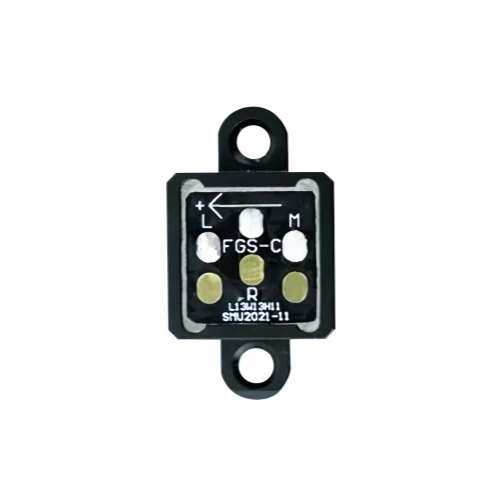
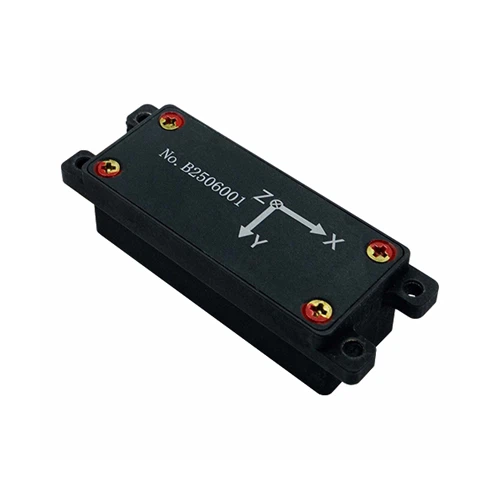
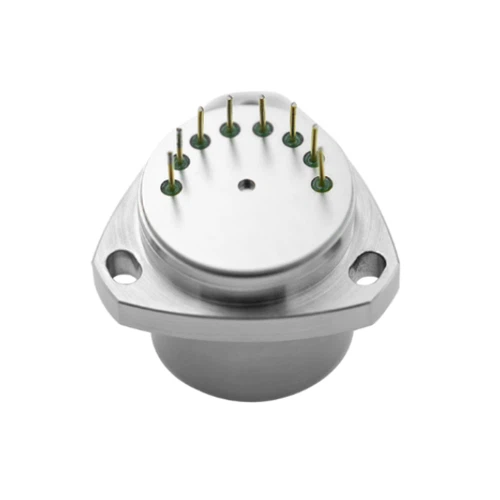
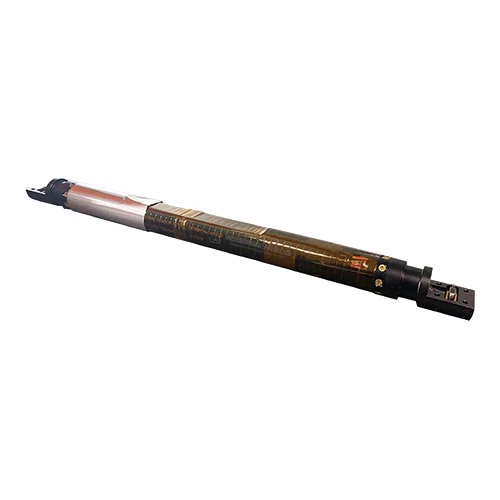
Pressure sensors
Piezoresistive sensors
Piezoresistive sensors are extensively used for measuring pressure in colorful operations. These sensors operate on the principle that electrical resistance changes when mechanical stress is applied to certain accouterments.
Capacitive sensors
Capacitive pressure sensors use the principle of variable capacitance to measure pressure. These sensors correspond to two conductive plates separated by a dielectric material. As pressure is applied, the distance between the plates changes, resulting in a change in capacitance.
Electromagnetic sensors
Electromagnetic pressure sensors employ the principles of electromagnetic induction to measure pressure. These sensors generally use a pressure-sensitive diaphragm connected to a core that moves within a coil. As pressure changes, the core's position shifts, altering the electromagnetic field and converting a voltage in the coil.
Motion and position sensors
Accelerometers
Accelerometers are pivotal factors in ultramodern stir-seeing technology. These devices measure acceleration forces, both static(like graveness) and dynamic(caused by movement or vibration). They operate on the principle of detecting changes in the capacitance of piezoelectric goods when subordinated to acceleration.
Gyroscopes
Working in tandem with accelerometers, gyroscopes measure angular haste and maintain exposure. They use the principles of angular instigation to describe rotational movement.
GPS sensors
Global Positioning System(GPS) sensors admit signals from satellites to determine position, speed, and time. These sensors are abecedarian in navigation systems, asset shadowing, and position-grounded services. They work by triangulating signals from multiple satellites to pinpoint precise equals on Earth.
Proximity sensors
propinquity sensors describe the presence of near objects without physical contact. They use colorful technologies like infrared, capacitive, or inductive seeing to determine an object's presence or absence.
Ultrasonic sensors
Ultrasonic sensors measure distance by emitting high-frequency sound swells and assaying the echoes. They're particularly effective in detecting transparent or reflective objects and are generally used in robotics, automotive parking backing, and liquid position seeing in tanks.
Optical sensors
Phototransistors
Phototransistors are light-sensitive transistors that amplify the photocurrent generated by incident light. They offer advanced perceptivity and gain compared to photodiodes, making them ideal for operations taking enhanced light discovery capabilities.
Fiber optic sensors
Fiber optical sensors use optic filaments to describe and measure colorful physical parameters similar to temperature, pressure, and strain. These sensors offer multitudinous advantages, including impunity to electromagnetic hindrance, high perceptivity, and the capability to operate over long distances.
Chemical sensors
Gas sensors
Gas sensors play a pivotal part in detecting and measuring colorful feasts in the terrain. These sensors are designed to identify specific feasts or cover overall air quality. They operate by measuring changes in electrical conductivity or other parcels when exposed to target feasts. Common operations include detecting dangerous feasts like carbon monoxide in homes, covering artificial emigrations, and icing air quality in enclosed spaces.
Biosensors
Biosensors are sophisticated devices that combine natural factors with physical or chemical sensors. These sensors use natural rudiments similar to enzymes, antibodies, or DNA to describe specific motes or organisms. Biosensors have revolutionized medical diagnostics, enabling rapid-fire and accurate discovery of conditions, pathogens, and biochemical labels.
Acoustic sensors
Microphones
Microphones are essential aural sensors that convert sound waves into electrical signals. They come in colorful types, including dynamic, condenser, and strip microphones, each with unique characteristics suited for different operations. Dynamic microphones are rugged and ideal for live performances, while condenser microphones offer advanced perceptivity for plant recordings. Strip microphones give a warm, quaint sound favored in certain music stripes.
Ultrasonic sensors
Ultrasonic sensors use high-frequency sound swells beyond mortal hail range to describe objects and measure distances. These sensors emit ultrasonic beats and measure the time it takes for the echo to return, calculating the distance to the target object. They find wide use in automotive parking systems, robotics, and artificial robotization for propinquity discovery and handicap avoidance.
Hydrophones
Hydrophones are specialized aural sensors designed to describe and record aquatic sounds. These aquatic microphones are pivotal in marine exploration, submarine discovery, and coastal oil painting disquisition. Hydrophones can capture a wide range of frequencies, from low-frequency Goliath calls to high-frequency dolphin hisses, furnishing precious data for marine biologists and oceanographers.
Magnetic sensors
Hall effect sensors
Hall effect sensors are abecedarian factors in glamorous seeing technology. These devices operate on the principle of the Hall effect, where a voltage is generated vertically to the current inflow in a captain when exposed to a glamorous field.
Magnetoresistive sensors
Magnetoresistive sensors represent another pivotal order in glamorous seeing technology. These sensors work the magnetoresistive effect, where electrical resistance changes in the presence of a glamorous field. This property allows for largely sensitive and precise glamorous field measures.
SQUID sensors
SQUID(Superconducting Quantum Interference Device) sensors represent the zenith of glamorous field discovery technology. These largely sophisticated devices use superconducting circles to describe extremely weak, glamorous fields with unequaled perceptivity. SQUID sensors can measure glamorous fields as small as many femto teslas, making them the most sensitive glamorous field detectors available.
Application of Sensors:
Healthcare
Sensors have revolutionized the healthcare industry by enabling accurate and real-time patient monitoring. From wearable fitness trackers to implantable sensors, these devices capture vital signs, track activity levels, and help detect anomalies. They play a crucial role in remote patient monitoring, telehealth, and improving the overall quality of care through continuous data collection and analysis.
Automotive
In the automotive sector, sensors are widely employed to improve performance, increase safety, and enable advanced driver assistance systems. Sensors are essential for allowing vehicles to perceive their surroundings, monitor important parameters, and make decisions for a safer and more effective driving experience. This includes proximity sensors for parking assistance, tire pressure sensors for optimal maintenance, accelerometers for stability control, and LiDAR sensors for autonomous driving.
Aerospace
In the aerospace industry, sensors are integral to ensuring safe and efficient operation of the aircraft. In addition to tracking altitude, airspeed, and temperature, they also keep an eye on engine performance, look for structural stress and vibration, and supply vital information to navigation and control systems.
Agriculture
Sensors have significantly advanced the agricultural sector and transformed farming methods. Soil sensors detect levels of moisture and nutrient content, allowing for precise fertilization and irrigation that maximizes crop yield. Environmental sensors keep track of the weather, enabling farmers to manage resources, plant, and control pests with precision. Additionally, sensors help with livestock monitoring, guaranteeing the welfare of the animals and raising agricultural productivity.
Home automation
Sensors are essential assets to home automation. With the ability to detect motion, light, temperature, humidity, and even the quality of the air, sensors are able to automate the control of security, heating, ventilation, and lighting systems within our homes. By collecting real-time data from sensors, home automation systems give homeowners more convenience and control over their living spaces by optimizing energy usage, enhancing comfort, and enhancing safety.
Certificate


FAQ
As one of the most professional sensor manufacturers and suppliers in China, we're featured by quality products and good price. Please rest assured to buy high-grade sensor for sale here from our factory. We also accept customized orders.