


Complete Product Portfolio
Full-Protection Design
Proprietary Technology
Power Supply Module
Your Leading Power Supply Module Supplier
Qingdao ZITN Technology is a premier manufacturer of high-end sensors, hybrid integrated circuits(HIC), HTHP MWD/LWD solution,DTS/DAS solutions. We ZITN Technology are recognized as a national-level specialized, sophisticated, and distinctive company, and a Shandong Provincial Manufacturing Champion, underscoring our leadership and innovation in the field.
Over 23 years of dedicated innovation, we have developed two flagship product series known for "High-Precision & High-Reliability" and "High-Temperature & High-Reliability," serving extreme environments in aerospace, and deep-earth/sea exploration. Ousolutions are trusted by over 800 clients across more than 30 countries worldwide.
-
![DC-DC Power Converter Module]()
-
![Single-output High-Temperature Linear Power Supply Module]() Single-output High-Temperature Linear Power Supply ModuleOperates Reliably Long-term at a Case Temperature of 200°C-250℃read more
Single-output High-Temperature Linear Power Supply ModuleOperates Reliably Long-term at a Case Temperature of 200°C-250℃read more
Design for High-temperature and Wide-temperature Environments
Smaller voltage regulation and load regulation -
![Dual-output High-Temperature Linear Power Supply Module]() Dual-output High-Temperature Linear Power Supply ModuleOperates Reliably Long-term at a Case Temperature of 275°Cread more
Dual-output High-Temperature Linear Power Supply ModuleOperates Reliably Long-term at a Case Temperature of 275°Cread more
Design for High-temperature and Wide-temperature Environments -
![Hybrid Integrated Circuit DC-DC Switching Power Supply Module]() Hybrid Integrated Circuit DC-DC Switching Power Supply Mo...Thick-Film Hybrid Integrated Circuit Technology (MCM)read more
Hybrid Integrated Circuit DC-DC Switching Power Supply Mo...Thick-Film Hybrid Integrated Circuit Technology (MCM)read more
-55℃ ~ +200℃ Operating Temperature (Case Temperature) -
![High-Temperature DC-DC Power Supply Module]() High-Temperature DC-DC Power Supply ModuleMCM (Multi-Chip Module) packaging technologyread more
High-Temperature DC-DC Power Supply ModuleMCM (Multi-Chip Module) packaging technologyread more
Operates reliably at up to 205℃
Built for Extreme Environments -
![Micro Power Supply Converter]() Micro Power Supply ConverterThick-Film Hybrid Integration Technologyread more
Micro Power Supply ConverterThick-Film Hybrid Integration Technologyread more
Fully Compatible with TI DCR/DCP Series
Compact Size and High Reliability -
![Radiation-Hardened DC-DC Converters]() Radiation-Hardened DC-DC ConvertersFully Compatible with International Leading Brandsread more
Radiation-Hardened DC-DC ConvertersFully Compatible with International Leading Brandsread more
Multi- functions
Hermetically Sealed All-metal Package -
![EMI Filter]() EMI FilterThick-film Hybrid Integration Technologyread more
EMI FilterThick-film Hybrid Integration Technologyread more
Metal Hermetic Sealed Package
Strong Anti-Interference Capability -
![Thick-Film Power Supply]() Thick-Film Power SupplyFully Pin‑to‑Pin Compatible with Leading international Brandsread more
Thick-Film Power SupplyFully Pin‑to‑Pin Compatible with Leading international Brandsread more
Integrates Multiple Functions
Designed for Extreme Operating Environments


Why Choose Us?
One-stop solution
We provide a full industrial chain from chip design to system integration. All key steps are completed in-house. This ensures high efficiency, strong quality control, and fast delivery.
Professional team
We have more than 350 employees, with over 40% technical specialists. Many team members are national and regional high-level experts. We invest over 20% of our resources in R&D every year.
Advanced R&D and manufacturing base
Our self-owned industrial park covers more than 20,000 square meters. It supports both research and mass production. We can develop and produce high-precision and high-reliability sensors and ICs.
Advanced equipment
We operate multiple specialized workshops for microelectronics and sensors. Over 2,000 sets of advanced equipment support our work. This ensures stable production and strong industrialization ability.
Types of Power Supply Module:
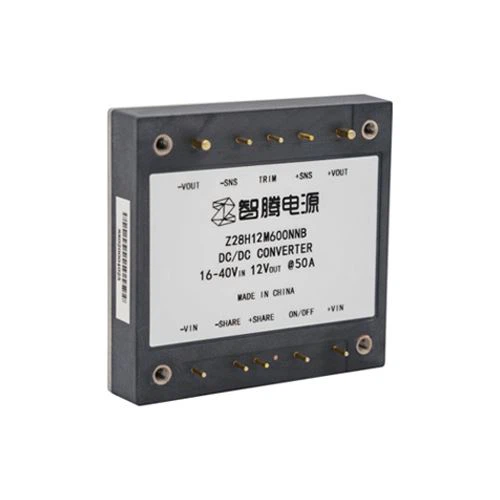
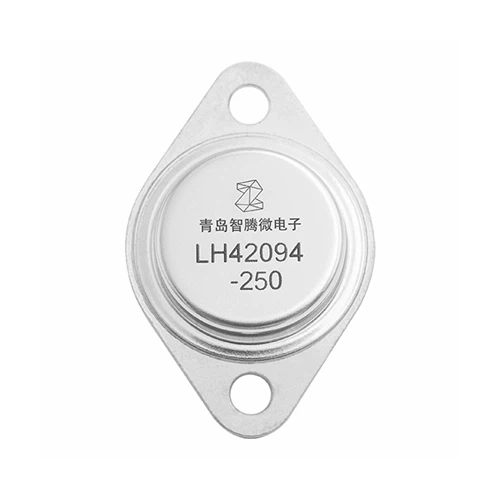
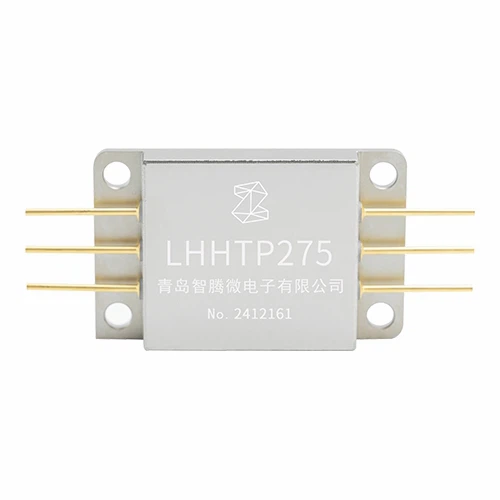
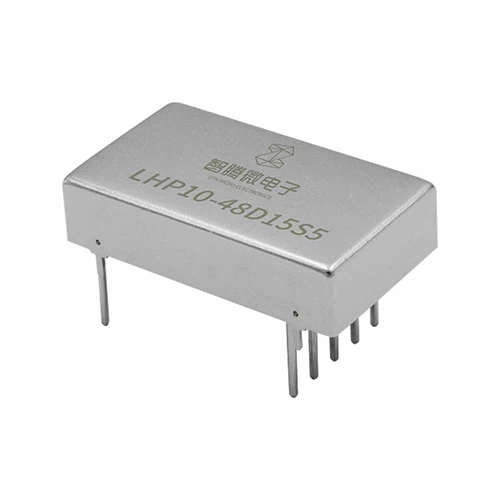
Classification by input and output voltage type (AC/DC)
AC-DC power module (AC to DC)
A module that converts alternating current (AC, such as 220V/110V mains) into direct current (DC).
DC-DC power module (DC to DC)
A module that converts one DC voltage into another DC voltage (such as high voltage to low voltage, low voltage to high voltage).
Classification by output characteristics
Voltage-stabilized power supply module
A module whose output voltage is less affected by load or input fluctuations and can remain basically stable.
Non-stabilized power supply module
The output voltage varies greatly with load or input, and only provides a rough DC voltage.
Classification by conversion principle
According to the way of energy conversion, it can be divided into linear power supply module and switching power supply module (switch mode power supply, SMPS).
Linear power supply module
By adjusting the linear conduction state of the tube (such as transistor), the excess electric energy is consumed to stabilize the output voltage.
Switching power supply module (SMPS)
Through the rapid on and off of high-frequency switching tubes (such as MOSFETs), the electric energy is stored in the inductor/capacitor, and then the stable voltage is output through filtering.
Classification by isolation characteristics
According to whether there is electrical isolation between input and output (i.e., whether it passes through magnetic coupling components such as transformers), it can be divided into isolation modules and non-isolation modules.
Isolated power module
The input and output are isolated by magnetic/optical coupling components such as transformers and optocouplers, without direct electrical connection.
Non-isolated power module
The input and output are directly connected through semiconductor devices without electrical isolation.
Redundant power module
Multiple modules are connected in parallel, supporting n+1 redundancy (such as server power supply), and automatically switching when a single module fails to ensure continuous power supply to the system.
High-voltage power module
Output voltage ≥1kv (such as x-ray machine, plasma equipment), requiring special insulation design and safety protection.
Battery management module (BMS)
DC-DC module with integrated charging management, overcharge/over-discharge protection, and balancing functions, used for lithium battery packs (such as electric vehicles, energy storage systems).
Advantages of Using Power Supply Module:
Ease of integration
These modules come as pre-designed units, allowing engineers to incorporate them into their projects without extensive design work. This not only speeds up the development process but also reduces the risk of design errors.
Reliability
Power supply modules are designed to meet stringent quality and safety standards, ensuring consistent performance even under challenging conditions. They often include features like over-voltage protection, short-circuit protection, and thermal shutdown, which safeguard the overall system.
Efficiency
Modern power supply modules are designed to convert power with minimal loss, reducing energy consumption and heat generation. This is particularly important in portable devices, where battery life is a critical factor. By using efficient power supply modules, manufacturers can enhance the performance and longevity of their products.
Applications of Power Supply Module
Servers:
In server systems, power modules are used to ensure reliable and efficient power supply. They are particularly important in high-performance servers where power efficiency and reliability are critical.
Data centers:
Power modules are used in data center equipment. They help to improve energy efficiency, which is a key concern in data centers due to the high amount of power they consume. Also, as previously mentioned, a power module should support power monitoring via digital communication.
Telecom equipment:
Power modules step up or down voltage levels in telecom, especially in power base stations, routers, and network switches.
Industrial applications:
Power modules are perfectly suited for industrial automation, edge computing, and mission-critical equipment due to their mechanical size, digital monitoring, and power redundancy.
Certificate


FAQ
As one of the most professional power supply module manufacturers and suppliers in China, we're featured by quality products and good price. Please rest assured to buy high-grade power supply module for sale here from our factory. We also accept customized orders.