


Delivering real-time, accurate data
Precisely calibrated gyroscope and accelerometer
High-performance satellite navigation module
IMU
Your Leading IMU Supplier
Qingdao ZITN Technology is a premier manufacturer of high-end sensors, hybrid integrated circuits(HIC), HTHP MWD/LWD solution,DTS/DAS solutions. We ZITN Technology are recognized as a national-level specialized, sophisticated, and distinctive company, and a Shandong Provincial Manufacturing Champion, underscoring our leadership and innovation in the field.
Over 23 years of dedicated innovation, we have developed two flagship product series known for "High-Precision & High-Reliability" and "High-Temperature & High-Reliability," serving extreme environments in aerospace, and deep-earth/sea exploration. Ousolutions are trusted by over 800 clients across more than 30 countries worldwide.
Why Choose Us?
One-stop solution
We provide a full industrial chain from chip design to system integration. All key steps are completed in-house. This ensures high efficiency, strong quality control, and fast delivery.
Professional team
We have more than 350 employees, with over 40% technical specialists. Many team members are national and regional high-level experts. We invest over 20% of our resources in R&D every year.
Advanced R&D and manufacturing base
Our self-owned industrial park covers more than 20,000 square meters. It supports both research and mass production. We can develop and produce high-precision and high-reliability sensors and ICs.
Advanced equipment
We operate multiple specialized workshops for microelectronics and sensors. Over 2,000 sets of advanced equipment support our work. This ensures stable production and strong industrialization ability.
Types of IMU:
MEMS IMU:
MEMS Inertial Measurement Units use Micro-Electro-Mechanical Systems (MEMS) technology, where small mechanical components are integrated with electronics on a microchip. The primary advantages of MEMS IMUs are their small size, low cost, and low power consumption. These features make MEMS IMUs ideal for applications in consumer electronics, automotive systems, and increasingly in military applications as well.
FOG IMU:
FOG IMUs utilize fiber optic gyroscopes (FOGs) to measure angular velocity, which enables them to provide extremely high precision and stability. This makes FOG IMUs ideal for applications that require minimal drift and long-term reliability, such as aerospace navigation, missile guidance, and high-end robotics.
Consumer Grade IMUs
Consumer-grade IMUs are made for automotive and commercial use. They don’t have added calibration, and they require significant integration time. These units are most commonly found in cell phones.
Industrial Grade IMUs
Industrial-grade IMUs are slightly more expensive than consumer-grade but are still moderately cost-effective. These pieces are able to navigate in a GPS-denied environment for up to one minute. They are typically used in vehicles and industrial robotics.
Tactical Grade IMUs
Tactical grade IMUs have significantly higher specifications than industrial and consumer. Tactical grade units can navigate in GPS-denied environments for up to 10 minutes. They have improved acceleration and in-run gyro bias stability. In other words, the sensor’s bias has greatly increased accuracy. These tactical-grade units are used in applications that need excellent capabilities and are not stifled by low budgets. They are most often used in military applications, ground robots, vehicles attempting to navigate in GPS-denied environments, and robotics.
Navigational Grade IMUs
Navigational grade IMUs are those that are rarely used in commercial applications with budget constraints.They are used for navigating in GPS-denied environments for hours at a time. The extremely high specs available in inertial measurement units are used in commercial airlines, satellites, and space shuttles.
Advantages of IMUs:
01
Small, lightweight, and relatively inexpensive.
IMUs, such as GPS, are typically much smaller and lighter than other navigation systems, which makes them ideal for applications that require size and weight, such as robotics and wearable devices.
02
It can be used in a variety of environments.
IMUs can be used in various environments, including those without GPS, which makes them ideal for applications such as navigation in tunnels or underground.
03
Can provide continuous measurements.
IMUs can provide continuous measurements, even when the object moves rapidly, making them ideal for tracking a vehicle’s or a person’s motion.
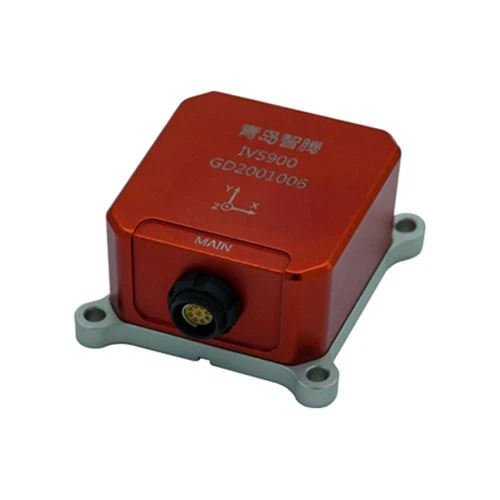
Applications of IMU:
Drones and UAVs: IMUs are crucial for flight control, stabilization, and navigation, particularly in GPS-denied environments. They enable autonomous flight and precise maneuvering.
Robotics: IMUs provide robots with the sense of motion and orientation needed for navigation, manipulation, and interaction with their environment.
Automotive and autonomous vehicles: IMUs contribute to advanced driver-assistance systems (ADAS) like lane keeping assist and electronic stability control. They also play a vital role in autonomous vehicle navigation, especially when GPS signals are unavailable.
Aerospace and aviation: IMUs are essential for aircraft and spacecraft navigation, attitude control, and flight management systems. They are critical for inertial navigation in space where GPS is not available.
Military and defense: IMUs are used in missile guidance systems, soldier tracking, unmanned vehicles, and other defense applications where high accuracy and reliability are paramount.
Virtual and augmented reality (VR/AR): IMUs track head and body movements, creating immersive and interactive experiences in VR and AR applications.
Wearables and health monitoring: IMUs in fitness trackers and smartwatches monitor activity levels, track sleep patterns, and detect falls.
Certificate


FAQ
As one of the most professional imu manufacturers and suppliers in China, we're featured by quality products and good price. Please rest assured to buy high-grade imu for sale here from our factory. We also accept customized orders.
imu, Inertial Measurement Unit IMU