

Hey there! As a supplier of DC - DC power supplies, I often get asked about the efficiency of these nifty little devices. So, I thought I'd sit down and write a blog post to share some insights on what the efficiency of a DC - DC power supply really means, why it matters, and how we at [Company] ensure we're offering top - notch, efficient products.
Let's start with the basics. What exactly is the efficiency of a DC - DC power supply? Well, in simple terms, efficiency is a measure of how well a power supply can convert the input power into the desired output power. It's expressed as a percentage, and the formula is pretty straightforward: Efficiency (%) = (Output Power / Input Power) x 100.
For example, if a DC - DC power supply takes in 100 watts of power from the source (input power) and delivers 90 watts of power to the load (output power), its efficiency is (90 / 100) x 100 = 90%. That means 90% of the input power is successfully converted into useful output power, while the remaining 10% is lost, usually in the form of heat.
Why does efficiency matter? There are several reasons. First off, energy efficiency is a big deal these days. With the growing concern for the environment and the rising cost of energy, using efficient power supplies can significantly reduce energy consumption. This not only helps our planet but also saves money for our customers in the long run.
Secondly, high - efficiency power supplies generate less heat. Heat is the enemy of electronic components. Excessive heat can cause components to degrade faster, leading to shorter lifespans and more frequent failures. By using a highly efficient DC - DC power supply, the amount of heat generated is minimized, which in turn improves the reliability and longevity of the entire system.
Now, as a DC - DC power supply supplier, we know that achieving high efficiency isn't always a walk in the park. There are several factors that can affect the efficiency of a DC - DC power supply.
One of the main factors is the type of DC - DC converter topology. There are different types, such as buck converters, boost converters, and buck - boost converters. Each topology has its own characteristics and efficiency profiles. For instance, buck converters are typically used to step down the voltage, and they can achieve relatively high efficiencies, especially when the input - to - output voltage ratio is close to 1. On the other hand, boost converters, which are used to step up the voltage, may have slightly lower efficiencies due to the nature of the conversion process.
Another factor is the quality of the components used in the power supply. Components like inductors, capacitors, and transistors play a crucial role in the conversion process. High - quality components with low resistance and low losses can help improve the overall efficiency of the power supply. At [Company], we source the best components from trusted suppliers to ensure our power supplies are as efficient as possible.
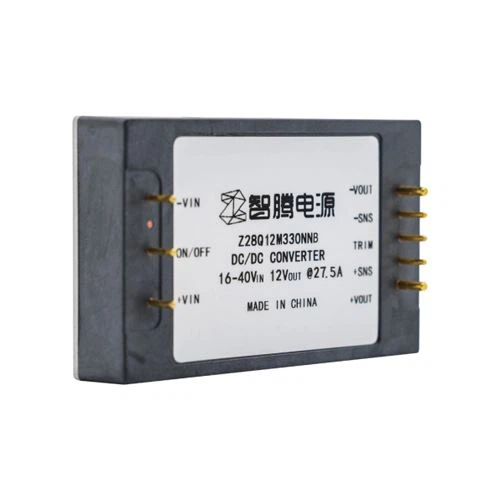

The operating conditions also have a significant impact on efficiency. Temperature, for example, can affect the performance of the components. Most power supplies are designed to operate within a certain temperature range, and as the temperature rises, the efficiency may start to decline. Load current is another important factor. Power supplies usually have an optimal load range where they achieve the highest efficiency. Operating outside this range can lead to decreased efficiency.
So, how do we ensure that the DC - DC power supplies we offer are efficient? Well, we have a team of experienced engineers who are constantly working on improving our designs. They use advanced simulation tools to model different converter topologies and component combinations to find the most efficient solutions.
We also conduct rigorous testing on all our products. We test them under different operating conditions, including various input voltages, output loads, and temperatures, to ensure they meet our strict efficiency standards. Only after passing these tests do our power supplies make it to the market.
At [Company], we offer a wide range of DC - DC power supplies to meet the diverse needs of our customers. Whether you need a small, low - power converter for a portable device or a high - power supply for an industrial application, we've got you covered. Check out our DC-DC Power Converter Module for more information on our product offerings.
In conclusion, the efficiency of a DC - DC power supply is a critical factor that can have a significant impact on energy consumption, reliability, and cost. As a DC - DC power supply supplier, we're committed to providing our customers with high - efficiency products that meet their needs. If you're in the market for a DC - DC power supply, we'd love to have a chat with you. Contact us today to discuss your requirements and see how we can help you find the perfect power supply solution.
References
- "Power Electronics: Converters, Applications, and Design" by Ned Mohan, Tore M. Undeland, and William P. Robbins
- "Switch - Mode Power Supplies: SPICE Simulations and Practical Designs" by Marty Brown