

What is the aging effect of a MEMS accelerometer?
In the field of sensor technology, MEMS (Micro-Electro-Mechanical Systems) accelerometers have become ubiquitous due to their small size, low power consumption, and high performance. As a leading supplier of MEMS accelerometers, we are continuously exploring the nuances of these devices, especially the aging effect, which can significantly impact their long - term performance.
Understanding MEMS Accelerometers
MEMS accelerometers are used to measure acceleration forces. These forces can be static, like the constant force of gravity, or dynamic, such as vibrations and motion. They work based on the principle of converting mechanical motion into an electrical signal. Inside a MEMS accelerometer, there is a proof mass suspended by springs. When acceleration occurs, the proof mass moves relative to the frame, and this displacement is detected by various sensing mechanisms, such as capacitive, piezoresistive, or piezoelectric sensing.
Capacitive MEMS accelerometers are widely used. In a capacitive accelerometer, the movement of the proof mass changes the capacitance between electrodes. This change in capacitance is then converted into an electrical output voltage that is proportional to the acceleration. Piezoresistive accelerometers, on the other hand, use the change in resistance of a piezoresistive material due to strain caused by the proof - mass movement.
The Concept of Aging in MEMS Accelerometers
Aging in MEMS accelerometers refers to the gradual degradation of their performance over time. This degradation can manifest in several ways, including changes in sensitivity, bias, noise, and linearity. The aging effect is a critical concern, especially in applications where long - term stability and accuracy are required, such as aerospace, automotive safety systems, and industrial monitoring.
One of the primary factors contributing to the aging of MEMS accelerometers is material fatigue. The springs that suspend the proof mass are subjected to repeated mechanical stress during normal operation. Over time, this stress can cause micro - cracks to form in the spring material, leading to a change in the spring constant. A change in the spring constant affects the relationship between the acceleration and the displacement of the proof mass, ultimately altering the sensitivity of the accelerometer.
Another factor is environmental stress. MEMS accelerometers are often exposed to a wide range of environmental conditions, including temperature, humidity, and vibration. High temperatures can cause thermal expansion of the materials inside the accelerometer, which may lead to misalignment of the proof mass and the sensing electrodes. This misalignment can result in a change in bias, which is the output of the accelerometer when there is no acceleration applied.
Humidity can also have a detrimental effect on MEMS accelerometers. Moisture can penetrate the packaging of the device and react with the materials, causing corrosion. Corrosion can damage the electrical connections and the mechanical structure of the accelerometer, degrading its performance. Vibration can contribute to the aging process by exacerbating the mechanical stress on the proof mass and the springs, accelerating the development of micro - cracks.
Impact of Aging on Sensor Performance
Sensitivity Change: As mentioned earlier, material fatigue and environmental stress can cause a change in the spring constant of the suspension system. This change in the spring constant directly affects the sensitivity of the accelerometer. A decrease in sensitivity means that the accelerometer will produce a smaller output voltage for a given acceleration, leading to inaccurate measurements.
Bias Shift: Bias is an important parameter in accelerometer performance. A bias shift can occur due to thermal expansion, mechanical misalignment, or corrosion. A positive or negative bias shift means that the accelerometer will give a non - zero output even when there is no acceleration, leading to errors in the measured acceleration values.
Noise Increase: Aging can also lead to an increase in sensor noise. This can be due to the degradation of the electrical components or the mechanical structure of the accelerometer. Increased noise makes it more difficult to distinguish the true acceleration signal from the background noise, reducing the signal - to - noise ratio and the overall accuracy of the measurements.
Linearity Degradation: The linear relationship between the input acceleration and the output voltage is a key characteristic of a high - quality accelerometer. Aging can cause the accelerometer to deviate from linear behavior. Non - linearity can make it challenging to calibrate the accelerometer accurately and can lead to measurement errors, especially in applications where a wide range of acceleration values need to be measured.
Mitigating the Aging Effect
As a MEMS accelerometer supplier, we are committed to minimizing the aging effect in our products. One approach is to use high - quality materials that are more resistant to mechanical stress and environmental factors. For example, we select materials with a high Young's modulus for the springs to reduce the likelihood of micro - crack formation.
Advanced packaging techniques are also crucial in protecting the MEMS accelerometer from the environment. Hermetic packaging can prevent moisture and other contaminants from entering the device, reducing the risk of corrosion. Additionally, we incorporate temperature compensation algorithms in our accelerometers to minimize the impact of temperature changes on performance.

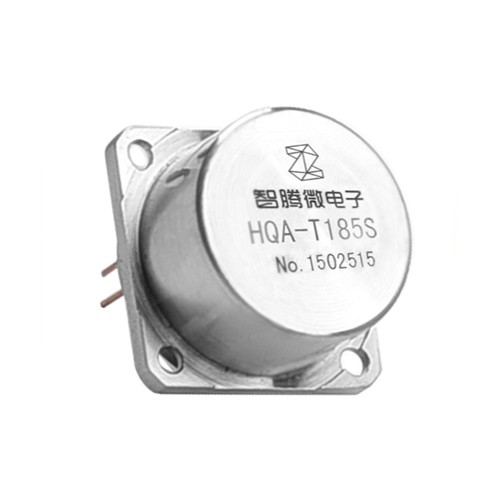
Regular calibration is another essential strategy for dealing with the aging effect. By periodically calibrating the accelerometer, we can correct for any changes in sensitivity, bias, and linearity. Our products are designed to be easily calibrated, and we provide detailed calibration procedures to our customers.
Related Products in Our Portfolio
In addition to our standard MEMS accelerometers, we also offer specialized products that are designed to meet specific application requirements. For applications in high - temperature environments, we have the High - Temperature Accelerometer Sensor. This sensor is built with materials that can withstand extreme temperatures, ensuring reliable performance even in harsh conditions.
For applications that require high precision and long - term stability, we recommend our Quartz Flexure Accelerometer. Quartz has excellent mechanical and electrical properties, making it an ideal material for accelerometers. The quartz flexure structure provides high sensitivity and low noise, with minimal aging effects.
We also offer the Digital Output Quartz Flexure Accelerometer, which combines the advantages of quartz flexure technology with digital output for easy integration into modern electronic systems.
Conclusion
The aging effect of MEMS accelerometers is a complex phenomenon that can have a significant impact on their performance. As a MEMS accelerometer supplier, we understand the importance of addressing this issue to ensure the long - term reliability and accuracy of our products. Through the use of high - quality materials, advanced packaging techniques, and calibration strategies, we strive to minimize the aging effect and provide our customers with the best - in - class accelerometers.
If you are in the market for MEMS accelerometers or have any questions about the aging effect and how it may impact your application, we encourage you to reach out to us for a detailed discussion. Our team of experts is ready to assist you in selecting the right product for your needs and providing you with customized solutions.
References
- Wise, K. D., Ayazi, F., & Najafi, K. (1998). Micromachined inertial sensors. Proceedings of the IEEE, 86(8), 1539 - 1558.
- Elfring, W. G., de Boer, M. J., & Fluitman, J. H. J. (2001). Thermal stability of polysilicon surface - micromachined accelerometers. Journal of Microelectromechanical Systems, 10(3), 347 - 355.
- Smith, S. T., & Howe, R. T. (1996). Electrostatic - stiffness tuning of lateral - axis microelectromechanical accelerometers. Journal of Microelectromechanical Systems, 5(1), 13 - 21.