

What is the resolution of a sensor? Well, let's get into it. As a sensor supplier, I've seen firsthand how important it is to understand this concept.
First off, resolution in the context of sensors is all about the smallest change that a sensor can detect and then represent as an output. Think of it like the tiniest difference in whatever it is the sensor is measuring that it can actually pick up on. For example, if you've got a temperature sensor, the resolution would tell you the smallest change in temperature that the sensor can notice and show as a different reading.
Let's say you're using a sensor to measure the position of an object. A high - resolution sensor can detect very small movements of that object. It's like having a super - sharp pair of eyes that can spot the slightest change in the object's location. On the other hand, a low - resolution sensor might only be able to tell you when the object has moved a relatively large distance.
Now, why does resolution matter? It's crucial in a whole bunch of applications. In precision manufacturing, for instance, where even the tiniest alignment errors can cause big problems. You need sensors with high resolution to make sure everything is lined up just right. In robotics, sensors with good resolution are essential for a robot to be able to move around and interact with its environment accurately. If the sensors can't detect small changes in position or distance, the robot might end up crashing into things or performing tasks incorrectly.
As a sensor supplier, we offer a wide range of sensors with different resolutions to meet various needs. Take our Dynamic Rotary Directional Sensor. This bad boy is designed to work in dynamic environments where it needs to quickly and accurately detect changes in rotation. It has a high resolution, which means it can pick up even the smallest changes in the rotational position. This is super useful in applications like motors and robotic joints.
Then there's our Inertial Measurement Unit IMU. An IMU is used to measure things like acceleration, angular velocity, and sometimes even magnetic fields. High resolution in an IMU is vital for applications like aircraft navigation, where any small miscalculation can have serious consequences. Our IMU has been carefully engineered to have a great resolution so that it can provide accurate measurements even in the most challenging conditions.
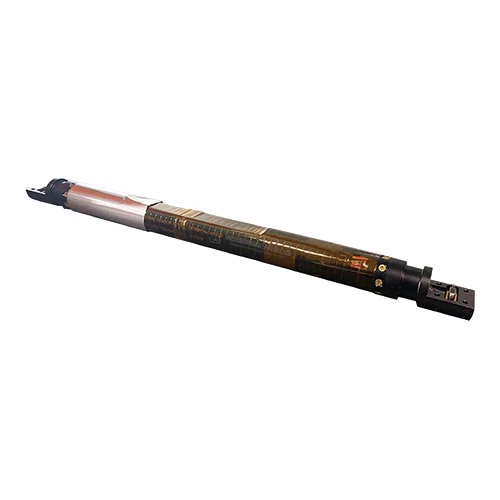
Another one of our awesome products is the High - Temperature Sector Directional Sensor. Working in high - temperature environments is tough, but this sensor is up for the challenge. It has a decent resolution that allows it to keep track of directional changes even when things get hot. This makes it suitable for use in industrial processes like metal smelting or in engines where high temperatures are the norm.
When you're choosing a sensor, resolution isn't the only thing you should consider. Accuracy is also a big deal. Accuracy refers to how close the sensor's reading is to the actual value of what it's measuring. A sensor can have high resolution but still be inaccurate if there are calibration issues or other factors affecting its performance. Repeatability is another factor. This is about how consistently the sensor can give the same reading when measuring the same thing multiple times.
As a sensor supplier, we understand that our customers need sensors that not only have the right resolution but also meet other requirements for accuracy and repeatability. That's why we put a lot of effort into testing and calibrating our sensors before we send them out.

If you're in the market for sensors, whether it's a high - resolution sensor for a precision application or a sensor that can work in harsh conditions, we've got you covered. We're more than happy to work with you to find the perfect sensor for your specific needs. Whether you're building a new piece of equipment or upgrading an existing one, our team of experts can help you make the right choice.
So, if you're interested in learning more about our sensors or want to start a procurement process, don't hesitate to reach out. We're here to make the process as smooth as possible and ensure that you get the best sensors for your money.
References:
- General knowledge in the field of sensor technology
- Product documentation of the sensors mentioned in the article