

As a supplier of DC - DC Power Converter Modules, I've witnessed firsthand the importance and intricacies of the linearity of the output voltage in these essential components. In this blog, we'll delve deep into what the linearity of the output voltage of DC - DC Power Converter Modules means, its significance, and how it impacts various applications.
Understanding DC - DC Power Converter Modules
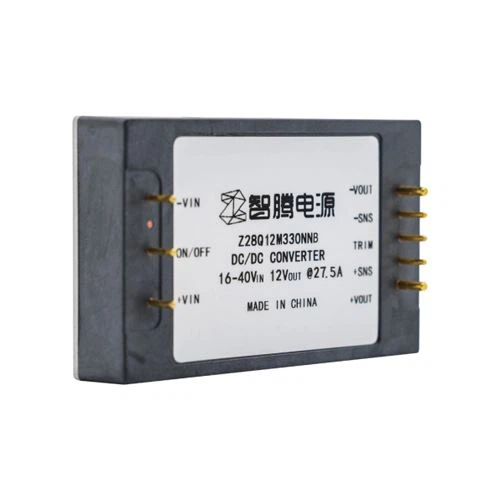
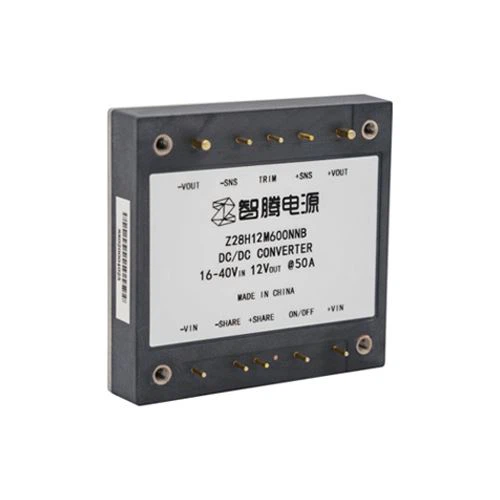
Before we dive into the linearity of the output voltage, let's briefly understand what DC - DC Power Converter Modules are. A DC - DC Power Converter Module is an electronic device that converts one DC voltage level to another. It is widely used in a variety of electronic systems, from small consumer electronics like smartphones and laptops to large industrial equipment and automotive applications.
These modules are designed to provide a stable and regulated output voltage, which is crucial for the proper functioning of the connected electronic circuits. They come in different topologies, such as buck converters (step - down), boost converters (step - up), and buck - boost converters (both step - down and step - up), each with its own characteristics and applications.
What is the Linearity of the Output Voltage?
The linearity of the output voltage of a DC - DC Power Converter Module refers to the relationship between the input voltage, load current, and the output voltage. In an ideal scenario, the output voltage should remain constant regardless of changes in the input voltage or the load current. However, in real - world applications, this is not always the case.
The linearity can be expressed in terms of how the output voltage changes as a function of the input voltage and the load current. For example, if the input voltage varies within a certain range, the output voltage should change in a predictable and linear manner. Similarly, as the load current changes, the output voltage should also change linearly or remain within an acceptable tolerance.
Mathematically, the linearity can be described by the following relationships:
- Input Voltage Linearity:
- Let (V_{in}) be the input voltage and (V_{out}) be the output voltage. The change in output voltage (\Delta V_{out}) with respect to the change in input voltage (\Delta V_{in}) can be expressed as (\frac{\Delta V_{out}}{\Delta V_{in}}). In a highly linear converter, this ratio should be close to zero, indicating that the output voltage is relatively insensitive to changes in the input voltage.
- Load Current Linearity:
- Let (I_{L}) be the load current. The change in output voltage (\Delta V_{out}) with respect to the change in load current (\Delta I_{L}) is given by (\frac{\Delta V_{out}}{\Delta I_{L}}), which is also known as the load regulation. A good linear converter will have a low load regulation, meaning that the output voltage does not change significantly with changes in the load current.
Importance of Linearity in DC - DC Power Converter Modules
The linearity of the output voltage is of utmost importance for several reasons:
- Component Reliability:
- Electronic components are designed to operate within a specific voltage range. If the output voltage of the DC - DC converter is not linear and fluctuates beyond the acceptable range, it can cause damage to the connected components. For example, in a microcontroller - based system, an unstable voltage supply can lead to incorrect operation, data corruption, or even permanent damage to the microcontroller.
- System Performance:
- In many applications, such as audio amplifiers and communication systems, the performance of the system is highly dependent on the stability of the power supply. A non - linear output voltage can introduce noise, distortion, and other performance degradation issues. For instance, in an audio amplifier, a fluctuating power supply voltage can result in audible hum or distortion in the output sound.
- Compatibility:
- Different electronic devices have different voltage requirements. A DC - DC converter with good linearity can ensure that the output voltage is compatible with a wide range of devices. This is particularly important in multi - device systems where different components may have different power supply needs.
Factors Affecting the Linearity of the Output Voltage
Several factors can affect the linearity of the output voltage of DC - DC Power Converter Modules:
- Component Tolerances:
- The components used in the converter, such as resistors, capacitors, and inductors, have manufacturing tolerances. These tolerances can cause variations in the circuit parameters, which in turn can affect the linearity of the output voltage. For example, a resistor with a large tolerance can change the feedback ratio in the converter, leading to a non - linear output voltage.
- Temperature:
- Temperature can have a significant impact on the performance of electronic components. As the temperature changes, the electrical characteristics of components such as resistors, capacitors, and semiconductors can change. This can lead to variations in the output voltage and affect the linearity of the converter.
- Switching Frequency and Ripple:
- DC - DC converters often use switching techniques to convert the voltage. The switching frequency and the resulting ripple voltage can also affect the linearity. High - frequency switching can introduce noise and interference, which can cause fluctuations in the output voltage. Additionally, the ripple voltage itself can contribute to non - linear behavior, especially if it is not properly filtered.
Measuring the Linearity of the Output Voltage
To measure the linearity of the output voltage, several tests can be performed:
- Input Voltage Sweep Test:
- In this test, the input voltage is varied over a specified range while keeping the load current constant. The output voltage is then measured at different input voltage levels. The results are plotted to analyze how the output voltage changes with respect to the input voltage.
- Load Current Sweep Test:
- Here, the load current is varied while keeping the input voltage constant. The output voltage is measured at different load current levels, and the data is used to evaluate the load current linearity.
- Combined Test:
- A more comprehensive test involves varying both the input voltage and the load current simultaneously. This test can provide a more accurate picture of the converter's linearity under real - world operating conditions.
Improving the Linearity of DC - DC Power Converter Modules
As a supplier of DC - DC Power Converter Modules, we are constantly working on improving the linearity of our products. Some of the techniques we use include:
- Advanced Feedback Control:
- Implementing sophisticated feedback control algorithms can help to maintain a more stable output voltage. These algorithms continuously monitor the output voltage and adjust the converter's operation to compensate for changes in the input voltage and the load current.
- High - Quality Components:
- Using high - quality components with low tolerances can reduce the impact of component variations on the linearity. We carefully select resistors, capacitors, and inductors with tight manufacturing tolerances to ensure better performance.
- Filtering and Decoupling:
- Adding proper filtering and decoupling capacitors can help to reduce the ripple voltage and noise, which in turn can improve the linearity of the output voltage. These capacitors can smooth out the voltage fluctuations caused by the switching action of the converter.
Applications and the Impact of Linearity
The linearity of the output voltage has a significant impact on various applications:
- Consumer Electronics:
- In smartphones, tablets, and laptops, the linearity of the power supply is crucial for battery life and system performance. A well - regulated and linear power supply can ensure that the device operates efficiently and without glitches.
- Industrial Automation:
- Industrial control systems rely on stable power supplies to ensure accurate operation of sensors, actuators, and other components. Non - linear power supplies can lead to measurement errors and control instability.
- Automotive Electronics:
- In automotive applications, such as engine control units, infotainment systems, and safety systems, the linearity of the power supply is essential for reliable operation. Fluctuations in the power supply can cause malfunctions and safety issues.
Conclusion
In conclusion, the linearity of the output voltage of DC - DC Power Converter Modules is a critical parameter that affects the performance, reliability, and compatibility of electronic systems. As a supplier, we understand the importance of providing converters with high linearity to meet the diverse needs of our customers.
If you are in need of high - quality DC - DC Power Converter Modules with excellent linearity, we invite you to contact us for further discussion and procurement. We are committed to providing you with the best solutions for your power conversion needs.
References
- Rashid, M. H. (2011). Power Electronics: Circuits, Devices, and Applications. Prentice Hall.
- Erickson, R. W., & Maksimović, D. (2001). Fundamentals of Power Electronics. Springer.
- Pressman, A. I., & Mok, K. K. (2009). Switching Power Supply Design. McGraw - Hill.