

Hey there! As a supplier of DC - DC Power Converter Modules, I often get asked about the difference between non - isolated and isolated DC - DC power converter modules. So, let's dive right in and break it down.
First off, what exactly is a DC - DC Power Converter Module? Well, a DC - DC Power Converter Module is a device that takes a DC input voltage and converts it to a different DC output voltage. You can learn more about it here. These modules are used in a wide range of applications, from consumer electronics to industrial equipment, to ensure that the right voltage is supplied to different components.
Non - Isolated DC - DC Power Converter Modules
Let's start with non - isolated DC - DC power converter modules. These are the simpler and often more cost - effective option. In a non - isolated converter, the input and output circuits are electrically connected. That means there's a direct electrical path between the input side and the output side.
One of the biggest advantages of non - isolated converters is their efficiency. Since there's no need for components like transformers to provide isolation, there are fewer energy losses. This makes them a great choice for applications where high efficiency is crucial and where the input and output can share a common ground. For example, in many mobile devices like smartphones and tablets, non - isolated DC - DC converters are used to step down the battery voltage to the levels required by different components such as the CPU, memory, and display.
Another plus is their size. Non - isolated converters are generally smaller than their isolated counterparts because they don't have the bulk of isolation components. This is a huge benefit in applications where space is limited, like in wearable devices or small IoT sensors.
However, non - isolated converters do have their drawbacks. Because the input and output are electrically connected, there's a risk of electrical interference being transferred from the input to the output. This can be a problem in sensitive electronic systems where even a small amount of interference can cause malfunctions. Also, in applications where safety is a concern, non - isolated converters may not be suitable. For instance, in medical equipment, electrical isolation is often required to protect patients from electrical shock.
Isolated DC - DC Power Converter Modules
Now, let's talk about isolated DC - DC power converter modules. In an isolated converter, the input and output circuits are electrically separated. This is usually achieved using a transformer or other isolation components.
The main advantage of isolation is safety. Since there's no direct electrical connection between the input and output, it reduces the risk of electrical shock. This makes isolated converters ideal for applications where safety is a top priority, such as in power supplies for medical devices, industrial control systems, and automotive electronics.
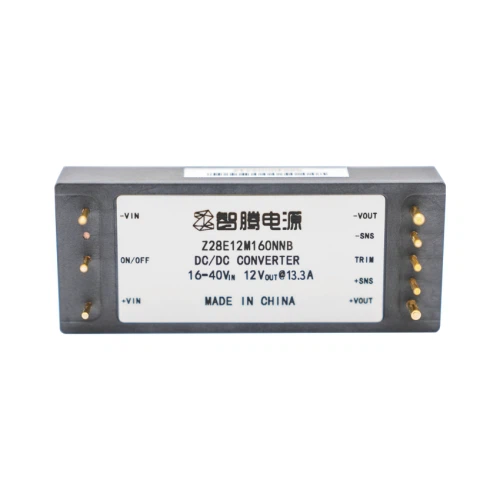
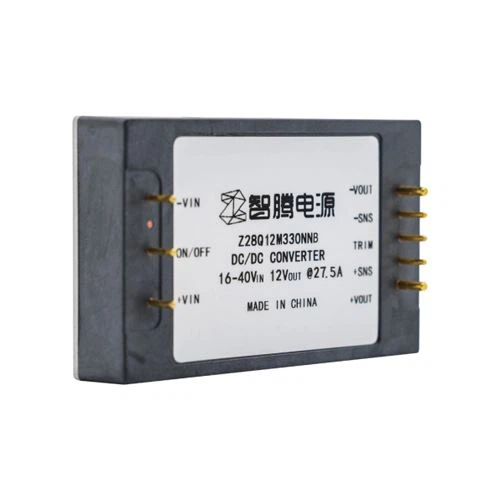
Isolated converters also provide excellent electrical isolation, which helps in reducing electrical noise and interference. This is crucial in applications where sensitive electronic components need to operate without being affected by external electrical disturbances. For example, in audio equipment, an isolated DC - DC converter can help in providing a clean power supply, resulting in better sound quality.
But isolated converters come with some trade - offs. They are generally more complex and expensive to manufacture compared to non - isolated converters. The addition of isolation components like transformers increases the size and weight of the module. Also, the efficiency of isolated converters is typically lower than that of non - isolated ones because of the energy losses associated with the isolation components.
Applications and Use Cases
Let's look at some specific applications and see which type of converter is more suitable.
Consumer Electronics
In consumer electronics like laptops, non - isolated converters are commonly used for powering internal components like the motherboard, hard drive, and SSD. They are small, efficient, and cost - effective. However, for the power adapter that connects the laptop to the AC mains, an isolated converter is often used to ensure safety.
Industrial Applications
In industrial settings, both types of converters are used. Non - isolated converters are used in applications where space is limited and cost is a concern, such as in small control panels or sensors. Isolated converters, on the other hand, are used in applications where electrical isolation is required for safety and to reduce interference, such as in motors, drives, and industrial automation systems.
Automotive Electronics
In the automotive industry, non - isolated converters are used for powering low - voltage components like the dashboard display, entertainment system, and sensors. Isolated converters are used in applications where electrical isolation is necessary, such as in hybrid and electric vehicles' battery management systems and high - voltage power electronics.
Making the Right Choice
When choosing between a non - isolated and an isolated DC - DC power converter module, you need to consider several factors. First, think about the application requirements. If safety is a major concern, an isolated converter is the way to go. If space and cost are critical, a non - isolated converter might be a better option.
Also, consider the input and output voltage requirements, the load current, and the level of electrical noise and interference in the operating environment. If your application requires a high level of electrical isolation to protect sensitive components or to meet safety standards, an isolated converter is mandatory.
As a supplier of DC - DC Power Converter Modules, I'm here to help you make the right choice. Whether you need a high - efficiency non - isolated converter or a reliable isolated converter, we have a wide range of products to meet your specific needs.
If you're in the market for DC - DC Power Converter Modules, don't hesitate to reach out and start a chat with us. We can discuss your requirements in detail and provide you with the best solutions for your project.
References
- "Power Electronics: Converters, Applications, and Design" by Ned Mohan, Tore M. Undeland, and William P. Robbins.
- "DC - DC Converters: Topologies, Analysis, and Design" by R. Erickson and D. Maksimovic.