

Hey there! As an IMU supplier, I often get asked about the linear acceleration measurement range of an Inertial Measurement Unit (IMU). So, I thought I'd take a moment to break it down for you in a way that's easy to understand.
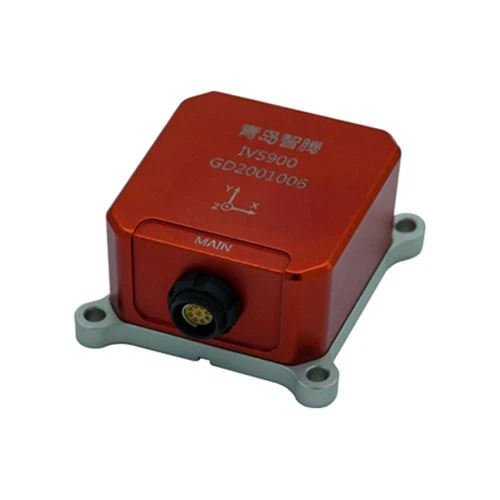
First off, let's quickly talk about what an IMU is. An Inertial Measurement Unit IMU is a device that measures and reports a body's specific force, angular rate, and sometimes the orientation of the body, using a combination of accelerometers, gyroscopes, and sometimes magnetometers. It's like having a super - sensitive set of sensors that can tell you exactly how your object is moving in 3D space.
Now, the linear acceleration measurement range is a crucial aspect of an IMU. Linear acceleration refers to the rate of change of velocity in a straight line. In an IMU, the accelerometers are the components responsible for measuring this linear acceleration.
The measurement range of an IMU's accelerometers is basically the maximum and minimum values of linear acceleration that the device can accurately measure. It's usually expressed in units of g, where 1 g is equal to the acceleration due to gravity on Earth, which is approximately 9.81 m/s².
Why does the measurement range matter? Well, it all depends on the application. Different applications require different ranges of linear acceleration measurement.
For example, in a consumer electronics device like a smartphone, the linear acceleration measurement range doesn't need to be very large. Smartphones use IMUs mainly for things like screen rotation, step counting, and basic motion sensing. A typical range for a smartphone IMU might be around ±2 g to ±8 g. This is because the accelerations experienced by a smartphone in normal use, like being picked up, shaken gently, or moved around in a pocket, are relatively small.
On the other hand, in industrial and aerospace applications, the requirements are much more demanding. In aerospace, an aircraft or a spacecraft can experience extremely high accelerations during take - off, landing, and maneuvers. An IMU used in these applications might need a measurement range of ±20 g or even higher. For instance, a fighter jet can experience high - g maneuvers during combat or aerobatic flights, and the IMU needs to be able to accurately measure these large accelerations to provide reliable data for flight control systems.
In industrial machinery, such as high - speed manufacturing equipment or robotics, the linear acceleration measurement range also needs to be carefully considered. Robots that move quickly or perform high - precision tasks may experience significant accelerations. An IMU with an appropriate measurement range is essential to ensure that the robot's movements can be accurately monitored and controlled.
So, how do we determine the right linear acceleration measurement range for an IMU? It starts with understanding the nature of the application. You need to analyze the maximum and minimum accelerations that the device will likely encounter. This might involve looking at the physical movements of the object, the forces acting on it, and the operating conditions.
Once you have an estimate of the acceleration range, you can select an IMU that has a suitable measurement range. But it's not just about choosing the largest range possible. A larger measurement range often comes at the cost of reduced sensitivity. Sensitivity refers to how accurately the IMU can measure small changes in acceleration. If you choose an IMU with a very large measurement range when you only need a small one, you might end up with a device that can't accurately detect the small accelerations that are important for your application.
As an IMU supplier, we offer a wide range of IMUs with different linear acceleration measurement ranges. We understand that every customer's needs are unique, and we're here to help you find the perfect IMU for your specific application. Whether you're working on a small - scale consumer project or a large - scale industrial or aerospace application, we have the expertise and the products to meet your requirements.
If you're in the process of selecting an IMU for your project, we can provide you with detailed technical specifications, performance data, and even sample units for testing. Our team of experts is always available to answer your questions and offer advice on choosing the right linear acceleration measurement range for your needs.
So, if you're interested in learning more about our IMUs or have a specific project in mind, don't hesitate to reach out. We're eager to start a conversation with you and help you find the best solution for your linear acceleration measurement needs. Let's work together to make your project a success!
References
- Common knowledge in the field of inertial measurement units and sensor technology.
- Technical documentation from various IMU manufacturers.