

Hey there! As a supplier of DC-DC Power Converter Modules, I've seen firsthand the design challenges that come with creating high-voltage DC-DC power converter modules. In this blog post, I'll share some of the key challenges we face and how we tackle them.
1. Electrical Isolation
One of the most critical design challenges for high-voltage DC-DC power converter modules is electrical isolation. High voltages can be extremely dangerous, and proper isolation is essential to protect users and equipment. When dealing with high-voltage applications, we need to ensure that there is no direct electrical connection between the input and output sides of the converter.
We use various isolation techniques, such as transformers and optocouplers. Transformers are great for providing galvanic isolation, which means there is no direct electrical path between the primary and secondary windings. This helps to prevent electrical shock and also reduces the risk of interference between different parts of the circuit. Optocouplers, on the other hand, use light to transfer signals between two isolated circuits. They are useful for providing signal isolation in control circuits.
However, achieving high levels of isolation can be tricky. We need to carefully select the isolation components and design the layout of the circuit to minimize the risk of breakdown. For example, the insulation materials used in transformers need to have high dielectric strength to withstand the high voltages. And the spacing between different conductive parts in the circuit needs to be carefully calculated to prevent arcing. You can learn more about our DC-DC Power Converter Module which are designed with top-notch isolation features.
2. Efficiency
Efficiency is another major concern when designing high-voltage DC-DC power converter modules. High-voltage converters often deal with large amounts of power, and any inefficiency can lead to significant power losses. These losses not only waste energy but also generate heat, which can affect the performance and reliability of the converter.
To improve efficiency, we use advanced semiconductor devices such as MOSFETs and IGBTs. These devices have low on-resistance, which means they can conduct current with less power loss. We also optimize the circuit topology. For example, resonant converters are often used in high-voltage applications because they can reduce switching losses.
But optimizing efficiency is an ongoing challenge. As the voltage and power levels increase, the losses also tend to increase. We need to constantly research and develop new techniques and materials to further improve the efficiency of our converters. We also conduct extensive testing to ensure that the converters meet the desired efficiency standards.
3. Thermal Management
With high power levels and potential inefficiencies, thermal management becomes a crucial design challenge. Excessive heat can damage the components in the converter module and reduce its lifespan. So, we need to find effective ways to dissipate the heat generated during operation.
We use heat sinks, fans, and thermal pads to help transfer the heat away from the critical components. Heat sinks are designed to increase the surface area for heat dissipation, allowing the heat to be radiated more effectively into the surrounding environment. Fans can be used to force air over the heat sinks, enhancing the cooling effect. Thermal pads are used to improve the thermal contact between the components and the heat sinks, ensuring better heat transfer.
However, designing an effective thermal management system is not easy. We need to consider the size and layout of the converter module, as well as the operating environment. For example, in some applications where space is limited, it can be challenging to fit large heat sinks or fans. And in high-temperature environments, the cooling requirements are even more demanding.
4. Voltage Regulation
Maintaining stable output voltage is essential for the proper operation of the equipment powered by the high-voltage DC-DC power converter module. High-voltage applications often require precise voltage regulation to ensure the safety and performance of the connected devices.
We use feedback control loops to regulate the output voltage. These loops continuously monitor the output voltage and adjust the operation of the converter to keep the voltage within the desired range. For example, if the output voltage starts to drop, the control loop will increase the duty cycle of the switching devices to boost the output voltage.
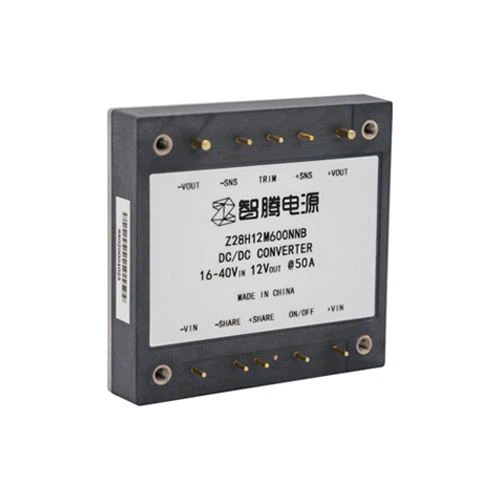

But achieving accurate voltage regulation can be difficult, especially in high-voltage and high-power applications. There are many factors that can affect the output voltage, such as input voltage variations, load changes, and temperature changes. We need to design the control loop carefully to compensate for these factors and ensure stable voltage output.
5. Size and Weight Constraints
In many applications, there are strict size and weight constraints for the power converter modules. For example, in aerospace and automotive applications, space and weight are at a premium. So, we need to design high-voltage DC-DC power converter modules that are compact and lightweight without sacrificing performance.
We use advanced packaging technologies and miniaturized components to reduce the size of the converter modules. For example, surface mount technology (SMT) allows us to place components more densely on the printed circuit board (PCB), saving space. We also use high-power density components that can handle large amounts of power in a small package.
However, reducing the size and weight while maintaining high performance is a trade-off. Smaller components may have limitations in terms of power handling and heat dissipation. We need to carefully balance these factors to design a converter module that meets the size and weight requirements without compromising on efficiency, reliability, and voltage regulation.
6. EMI/EMC Compliance
Electromagnetic interference (EMI) and electromagnetic compatibility (EMC) are important considerations in the design of high-voltage DC-DC power converter modules. High-voltage converters can generate electromagnetic noise, which can interfere with the operation of other electronic devices in the vicinity. And they also need to be able to operate properly in the presence of external electromagnetic interference.
We use EMI filters and shielding techniques to reduce the electromagnetic noise generated by the converter module. EMI filters are designed to block unwanted frequencies and allow only the desired signals to pass through. Shielding can be used to enclose the converter module and prevent the electromagnetic radiation from escaping.
Meeting EMI/EMC standards is a complex process. We need to conduct extensive testing to ensure that the converter module meets the relevant regulations. And we also need to consider the interaction between the converter module and the other components in the system to ensure overall electromagnetic compatibility.
Conclusion
Designing high-voltage DC-DC power converter modules is a challenging task that requires a deep understanding of electrical engineering principles and a lot of practical experience. From electrical isolation to EMI/EMC compliance, there are many factors to consider. But at our company, we are committed to overcoming these challenges and providing high-quality converter modules that meet the needs of our customers.
If you're in the market for high-voltage DC-DC power converter modules, we'd love to have a chat with you. Whether you have specific requirements for your application or just want to learn more about our products, feel free to reach out to us for a procurement discussion. We're here to help you find the best power conversion solutions for your needs.
References
- Erickson, R. W., & Maksimovic, D. (2001). Fundamentals of Power Electronics. Springer.
- Mohan, N., Undeland, T. M., & Robbins, W. P. (2012). Power Electronics: Converters, Applications, and Design. Wiley.